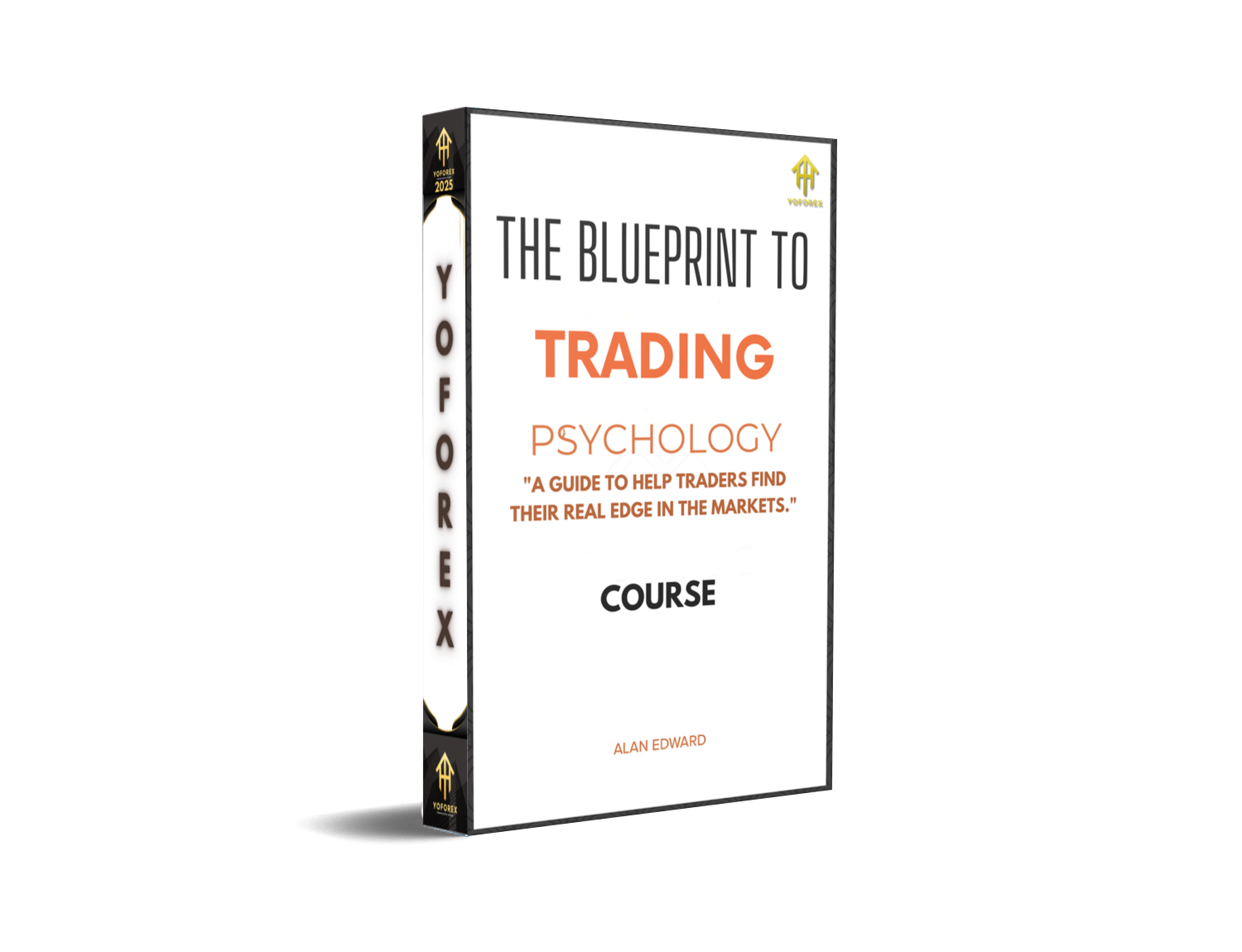
The Blueprint to Trading Psychology Course – Full Guide
If you’ve traded for even a few weeks, you’ve probably realized something a bit shocking… the market isn’t your biggest enemy. Your mind is. The Blueprint to Trading Psychology Course digs straight into this truth and teaches you how to think in probabilities, manage emotions, and move away from the “natural” but destructive mindset most traders bring into the markets. And honestly, if you can change the way you think—even a little—you’ll notice your trading results start shifting too. Not overnight, of course, but gradually, steadily… almost like the math finally stops fighting you and starts working for you.
Most traders try to rely on strategies, indicators, or some “holy grail” pattern. They swap systems every week, tweak settings, chase entries, and get lost in fear when trades go against them. This course takes a completely different angle. Instead of focusing on charts first, it focuses on your internal blueprint—how you respond to risk, uncertainty, randomness, and statistical outcomes. Those are the things that separate losers from consistently profitable traders.
Let’s dive deeper into what makes this trading psychology blueprint so powerful and why probabilistic thinking is the core skill every trader needs.
Understanding Why Probabilistic Thinking Matters
Humans are naturally wired for certainty—we want to know what will happen before it happens. But trading doesn’t work like that, and the sooner you accept it, the better your results will get. The Blueprint to Trading Psychology Course starts by teaching one essential truth:
Every trade is just one event in a long series of outcomes.
No single trade matters—only the distribution over time does.
This isn’t just theory. It’s the foundation of professional trading rooms across prop firms, banks, and hedge funds. And yet, retail traders rarely practice it. They get emotionally attached to wins and losses. They zoom into one candle and panic. They double lots after losses coz “this one has to win.” This mindset destroys accounts faster than any bad system.
When you start thinking in probabilities, everything changes:
• You stop predicting and start managing risk.
• You understand losses aren’t personal—they’re mathematical.
• You execute your plan even when it feels uncomfortable.
• You let go of the need to be right and focus on being consistent.
The course repeats this point often, almost drilling it in until it becomes second nature. And honestly, that’s exactly what most traders need—a rewiring of their internal expectations.
Breaking Old Thinking Patterns
Most traders operate with emotional shortcuts. We are built for survival, not statistical decision-making. So the Blueprint course teaches you to identify common mental traps:
1. Outcome Bias
Believing a good result means you made a good decision—even if the decision was reckless.
2. Recency Bias
Thinking your last trade determines your next one.
Losing streak? You shrink lot size.
Winning streak? You risk more.
Both are dangerous.
3. Confirmation Bias
Seeing what you want to see on the chart, not what’s actually there.
4. Unrealistic Expectations
Believing trading should be easy, fast, or predictable.
The Blueprint fixes these flaws step-by-step through exercises. You reflect, journal, and reframe your thought processes until you begin operating with a trader’s mindset—not a gambler’s.
Believing in the Math – The Turning Point
This course doesn’t just teach psychology—it teaches statistical confidence. Once you genuinely understand the math behind your edge, you stop obsessing over individual trades.
For example, if your strategy has a 55% win rate and a 1:1.5 risk-to-reward, then:
Even losing four trades in a row does NOT invalidate your edge.
It’s just part of the distribution.
But traders panic. They change systems. They lose emotional control. They distrust their data.
The Blueprint guides you to trust the math—because once you do, something amazing happens:
• You follow rules more strictly.
• You stop revenge trading.
• You stop closing winning trades too early.
• You stop modifying your system impulsively.
• You finally feel calm while trading.
It’s not magic. It’s mindset + probability theory working together.
Key Components of the Blueprint Course
Though it’s a psychology-focused course, it’s extremely practical. Here’s what you can expect inside:
1. Exercises to Train Probabilistic Thinking
These include scenarios, decision games, and reflections that force your brain to move beyond emotional guessing.
2. Market Uncertainty Acceptance Techniques
You learn how to accept uncertainty without anxiety—even when trades fluctuate.
3. Risk Reframing Sessions
Instead of fearing risk, you start seeing it as a controlled cost of doing business.
4. Self-Awareness & Trigger Mapping
You map out what causes your emotional reactions—hesitation, overtrading, revenge trading, panic exits.
5. Journaling Templates
Designed to track emotional states, not just trades, so you identify mental patterns before they hurt your account.
6. Implementation Roadmaps
You get action plans that help you integrate psychological habits into your daily trading routine.
This is why the Blueprint is so effective. It doesn’t just give theory—it gives transformation frameworks.
Why Thinking Differently Is the Only Path Forward
The biggest shift this course brings is helping you think differently than you naturally would. Trading success depends heavily on this because the market punishes natural human behavior.
Naturally, we want to avoid losses.
Naturally, we want to double down to recover quickly.
Naturally, we want certainty before acting.
Naturally, we get attached to outcomes.
Professional traders do the opposite.
• They accept losses as part of the plan.
• They don’t double lots emotionally.
• They execute without needing certainty.
• They treat trades like statistical events.
This course reshapes your thinking slowly, but deeply. Over time you start:
• Feeling calmer during live trading.
• Letting your system run without interference.
• Seeing the bigger picture instead of single trades.
• Approaching the charts with logic, not hope.
And that’s the whole point—to build a mental blueprint that supports long-term success.
How This Mindset Helps You Long-Term
Once you master probabilistic thinking, your trading approach becomes almost automatic:
• You stop reacting emotionally.
• You trust your edge.
• You manage risk responsibly.
• You stay consistent through ups and downs.
• You stop blowing accounts from impulsive mistakes.
And eventually…
You build the discipline that most traders only dream about.
This is what separates amateurs from professionals—not the strategy, not the broker, not the indicator… but the psychology behind the execution.
When you combine this mindset with a solid system, your trading becomes smoother, more predictable (in behavior, not outcome), and far more profitable in the long run.
Final Thoughts
The Blueprint to Trading Psychology Course is more than just lessons—it’s a transformation in how you think, react, and behave as a trader. When you begin thinking in probabilities, trusting the math, and repatterning your emotional responses, you align yourself with how real professional traders approach the markets.
And honestly, this shift—this mental upgrade—is what sets you “on your way,” just like the course promises.
If you stick with it…
If you apply the exercises…
If you remember that the math doesn’t lie…
You’ll find yourself evolving into the disciplined, confident trader you always wanted to become.
Comments (0)
No comments yet. Be the first to comment!
Leave a Comment