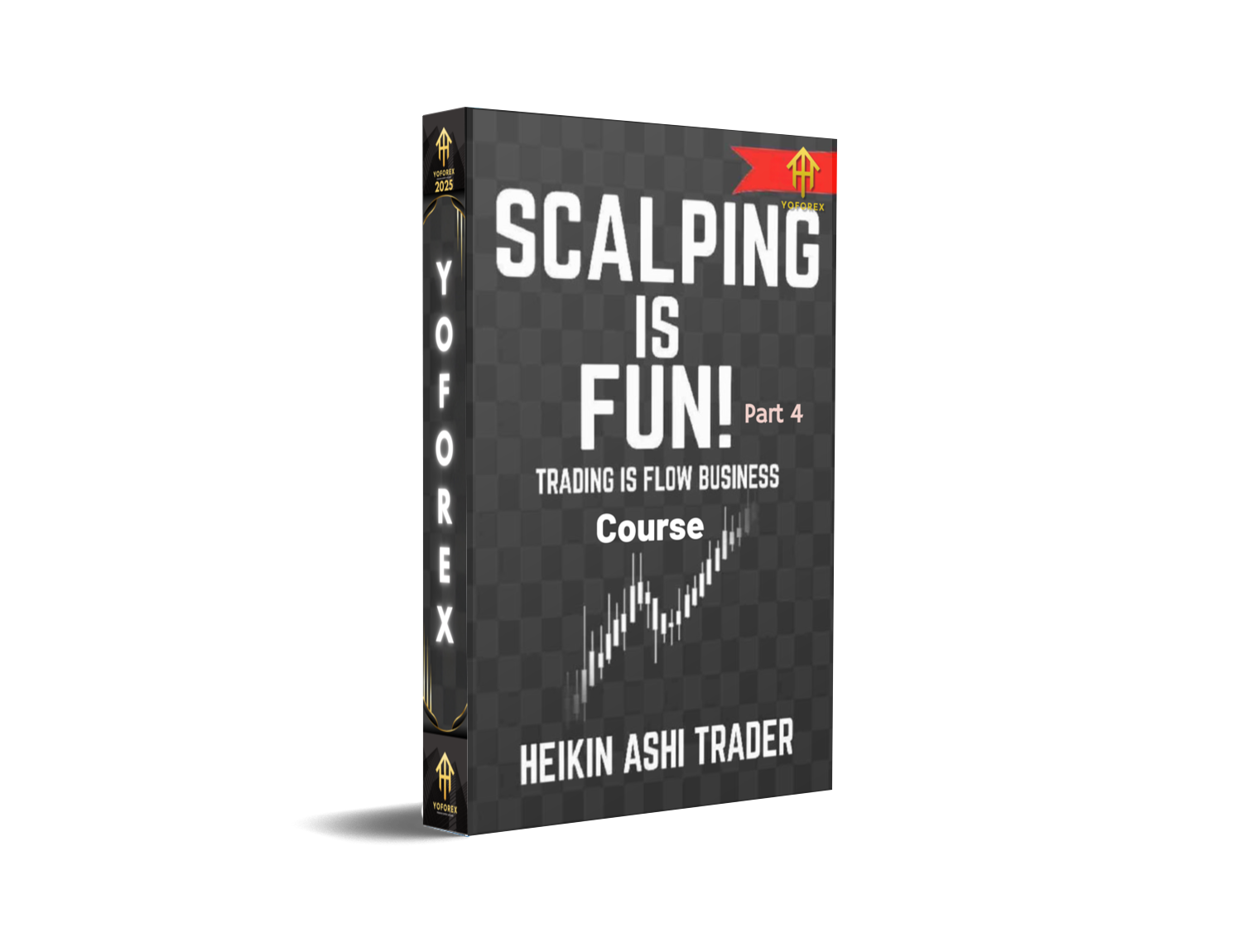
Scalping Is Fun! Part 4 – Trading Is Flow Business
Trading isn’t your typical 9-to-5 gig… it’s flow business.
That’s the powerful idea behind Scalping Is Fun! Part 4 by Heikin Ashi Trader. Unlike a regular job where effort and reward have a direct correlation, trading rewards tend to come in unpredictable bursts. One week, your trades click effortlessly — and the next, it feels like the market’s turned against you.
So, what makes the difference? Timing. Successful scalpers know when to engage and, more importantly, when to stay out. This chapter takes us right into the rhythm of professional trading — understanding flow, cycles, and how to ride them instead of fighting them.
Overview – What “Trading Is Flow Business” Really Means
Trading is a performance craft — more like surfing waves than assembling furniture.
You can’t control the ocean, but you can learn to move with it. That’s the essence of flow business.
In the book’s fourth part, the Heikin Ashi Trader emphasizes that trading profits don’t distribute evenly across all days. Markets breathe — they expand and contract, trend and consolidate. The professional trader’s job isn’t to force profits every single day but to recognize when the market is giving signals worth acting on.
For example, Monday mornings might look quiet and random, but post-London open or New York session might explode with momentum.
If you’re scalping during dead hours, you’ll only find frustration and false signals.
That’s why “flow” means identifying your personal best trading windows — the hours and setups where your strategies perform best.
In short: Trade when the market gives you flow; rest when it doesn’t.
The Mindset Behind Flow Trading
The key lesson here isn’t just technical — it’s psychological. Most beginners fail not because they lack a good system but because they trade at the wrong times.
Scalping is like sprinting — short, fast, and demanding. It requires total focus and quick reactions. If you push through fatigue or boredom, mistakes creep in.
Heikin Ashi Trader explains that professional scalpers treat their mental energy like capital — they spend it only when necessary. That means:
- Skipping unproductive days without guilt.
- Accepting asymmetry in results — some days are gold, others are garbage.
- Understanding that discipline means doing nothing when there’s nothing to do.
Trading in flow is a mix of art and timing — not endless activity.
When Not to Trade – The Secret Skill
Every scalper dreams of consistency, but paradoxically, consistency comes from knowing when not to trade.
Heikin Ashi Trader highlights a few specific “dead zones” and emotional traps that sabotage results:
1. Post-News Whipsaws
Right after major economic releases, spreads widen and volatility becomes chaotic. Scalpers often misinterpret that chaos as opportunity. The truth? It’s randomness disguised as movement.
2. The “Force It” Mindset
Ever had a losing day and tried to win it all back immediately? That’s the opposite of flow. It’s ego. Flow trading requires calm — you step aside, review, and wait for clarity.
3. Flat Market Phases
Scalping thrives on volatility. If candles barely move, your strategy gets trapped in false signals. Professionals spot these dead sessions early and stay on the sidelines.
4. Emotional Fatigue
Trading tired is like driving half-asleep. No matter how perfect your setup, execution fails.
Recognizing fatigue — both physical and mental — keeps you from burning capital and confidence.
The Best Times to Trade in Flow
There’s no universal “perfect” time to trade, but patterns do exist. The Heikin Ashi Trader suggests aligning your strategy with the most active trading sessions.
London Session (8 AM–12 PM GMT)
This is the powerhouse. Liquidity surges, trends form clearly, and spreads tighten. Perfect for quick scalps.
New York Session (12 PM–4 PM GMT)
Volatility peaks again, especially during overlaps with London. This window creates explosive setups for 5–15 minute scalpers.
Asian Session (1 AM–7 AM GMT)
Quieter, but great for range scalping on pairs like AUDJPY or USDJPY. Some pros prefer this session for its rhythm and predictability.
The trick isn’t trading all sessions. It’s discovering where you perform best and making that your domain.
Embracing Uneven Results
One of the most practical insights in Scalping Is Fun! Part 4 is that profits don’t follow a straight line.
Out of 20 trading days in a month, you might see:
- 5 days of strong gains
- 10 small, neutral days
- 5 losing days
And that’s perfectly normal. Expecting daily profits is like expecting the tide to stay still.
Instead, focus on managing losses, protecting your wins, and letting your system work over time.
Heikin Ashi Trader calls this acceptance of “asymmetry” the real maturity point for a trader. It’s when you stop forcing performance and start flowing with probability.
The Role of Heikin Ashi Candles in Flow Trading
Since this series revolves around the Heikin Ashi method, it’s worth revisiting why these candles matter for flow scalping.
Heikin Ashi charts filter noise and reveal market rhythm visually. In flow terms:
- Smooth candles = steady trend → ride the wave
- Small-bodied candles = uncertainty → step aside
- Color transition = potential exhaustion → tighten stops
By aligning your trades with Heikin Ashi’s smoother momentum cues, you automatically sync with market flow. It’s a visual way to “feel” when the market is moving or pausing.
Real-World Example – Flow in Action
Imagine trading EURUSD on a Thursday morning.
The London session opens, volatility spikes, and Heikin Ashi candles start printing a strong, smooth series of bullish bars. You enter small, add as confirmation grows, and exit at the first candle shift.
Next day, Friday, the market barely moves. You open your charts, see small alternating candles, and… do nothing.
Two days, two opposite actions — both correct.
That’s flow business in practice: trading only when the river is moving.
Common Mistakes That Break Flow
Even after years of practice, many traders sabotage their rhythm unintentionally:
- Overanalyzing setups: Too many indicators drown intuition.
- Ignoring breaks: Mental exhaustion kills flow.
- Revenge trading: Emotional reactions lead to chaos.
- Switching systems too fast: Flow develops from consistency, not constant tweaking.
To counter this, keep a trading diary. Record not just your results but your energy levels, emotional state, and focus. Patterns emerge — you’ll learn when your “flow days” naturally appear.
Building a Flow Routine
Heikin Ashi Trader advises turning trading into a repeatable performance ritual. Try this:
- Pre-Market Routine – Check calendar events, meditate, review setups.
- Flow Time – Trade during your proven profitable window only.
- Post-Market Review – Screenshot trades, reflect on what aligned or didn’t.
- Rest & Reset – Don’t jump into another session unless the market justifies it.
Consistency of routine creates flow consistency. It’s how pros maintain peak performance without burnout.
Why This Lesson Matters for Scalpers
Most traders focus on indicators and entries. Few study rhythm.
Yet, rhythm — timing, flow, energy — separates long-term winners from impulsive clickers.
Scalping Is Fun! Part 4 reminds us that the market isn’t a machine. It’s an organism that breathes, hesitates, and explodes — and your job is to sense when it’s alive.
Final Thoughts
Trading is a game of probability and patience. Flow business isn’t about predicting every move; it’s about being present when the opportunity unfolds naturally.
If you master that — if you learn when to not trade — you’ll find that trading becomes smoother, less stressful, and yes… more fun.
And that’s exactly what the Scalping Is Fun! series promises — transforming trading from a daily grind into a skillful dance with the market’s pulse.
Read Next:
- Scalping Is Fun Part 3 – Practical Time Management for Traders
- Scalping Is Fun Part 5 – Momentum and Market Psychology
Join the YoForex Community
Got questions or want help mastering your own scalping flow?
Chat with us anytime on WhatsApp or join our Telegram group.
YoForex – empowering traders worldwide, one free tool at a time.

Comments (0)
No comments yet. Be the first to comment!
Leave a Comment